
2A Game Download: The Strange Psychology of an App That Starts Feeling Bigger Than a Game
3 hours agoSize
11MBVersion
v3.1.27Requirements
Android/IOSDownloads
98k
Description
There’s a very specific moment when most people download a game like 2A Game.
Usually, it happens late at night.
Not because someone is deeply researching mobile gaming ecosystems or reward mechanics. More often, it starts with boredom mixed with curiosity. A friend mentions it. A short clip appears in a feed. Someone claims they made quick rewards. The app icon looks polished enough to seem legitimate, but not polished enough to feel corporate.
So you install it thinking one thing:
“I’ll just try it for a few minutes.”
That first assumption turns out to be important.
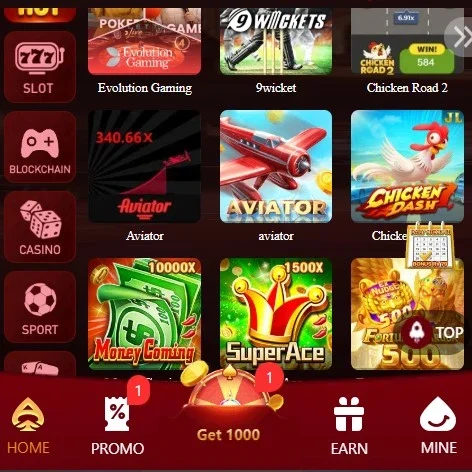
The 2A Game doesn’t really feel designed around long gaming sessions. At least not initially. The first twenty minutes are surprisingly frictionless. Fast loading. Bright interfaces. Constant movement. Tiny celebrations everywhere. Like coins, spins, bonuses, countdowns, rewards. The app rarely lets the screen sit still long enough for your brain to disengage.
And honestly, that part works.
The early experience feels lightweight in the best way possible. Nothing feels demanding yet. There’s no steep learning curve. No complicated strategy. No pressure to become “good” at anything. 2A Game understands modern attention spans extremely well. It doesn’t ask users to commit. It asks them to continue.
That difference matters more than people realize.
- The First Session Feels More Rewarding Than It Probably Is
- Day Two Is Usually Where Expectations Begin Changing
- The Reward System Starts Teaching Behavior
- The App Feels Different Once Withdrawals Enter the Picture
- Around Day Five, the Pattern Becomes Visible
- The Line Between Casual Entertainment and Habit Formation
- Where Frustration Usually Begins
- What 2A Game Actually Reveals About Mobile Gaming in 2026
- So… What Does Using 2A Game Actually Feel Like?
- Short FAQ
The First Session Feels More Rewarding Than It Probably Is
The strange thing about the 2A Game is that the early momentum creates an illusion of progress almost immediately.
Within the first session, users often feel like they are “figuring it out.” Small rewards appear quickly enough to create confidence. Even when the actual value of those rewards remains unclear, the visual presentation creates emotional satisfaction.
And this is where the app becomes psychologically interesting, just like the top-rated game (Laam 777 Game and 9K Game)
Because the enjoyment isn’t necessarily tied to gameplay itself.
It’s tied to accumulation.
Numbers rise.
Notifications appear.
Bonus timers expire.
New offers unlock.
Tiny animations reinforce every action.
The app constantly communicates that something productive is happening.
For casual players, this creates a surprisingly immersive loop. You stop thinking in terms of “winning” or “losing.” Instead, the brain starts focusing on maintaining momentum.
That subtle shift changes how the app feels after the first day.
Day Two Is Usually Where Expectations Begin Changing
The second day with the 2A Game feels different from the first for one reason:
Curiosity gets replaced by evaluation.
The excitement is still there, but users start paying closer attention to how the reward systems actually work. This is usually when people begin noticing the pacing beneath the surface.
Early rewards arrive fast.
Later rewards slow down.
Certain milestones suddenly require more consistency.
None of this is unique to the 2A Game specifically. Most engagement-driven mobile platforms use pacing systems like this. But the 2A Game hides the transition relatively well at first.
The app rarely says “slow down.”
Instead, it subtly changes how often it validates your actions.
That creates an emotional shift many users recognize but struggle to describe. The experience starts feeling less casual and slightly more transactional. Not necessarily in a negative way — just more intentional.
You begin checking timers.
You remember unfinished tasks.
You open the app “for a second” and stay longer than expected because another reward cycle is about to complete.
This is the point where 2A Game stops feeling like a random experiment and starts becoming part of a routine.
The Reward System Starts Teaching Behavior
What makes 2A Game fascinating from a user-behavior perspective is how quickly habits form around uncertainty.
The rewards are rarely predictable enough to feel mechanical.
Sometimes progress feels fast.
Sometimes painfully slow.
Sometimes bonuses appear exactly when motivation starts fading.
That inconsistency keeps users emotionally engaged longer than a fully predictable system would.
There’s a moment around the third or fourth day where many players begin mentally negotiating with the app.
“If I play a little longer, maybe the next reward will be worth it.”
That thought appears surprisingly often.
Not because users are irrational, but because 2A Game constantly suggests that the next interaction may feel more rewarding than the current one.
This is where the platform becomes less about entertainment alone and more about anticipation.
And anticipation is powerful.

Even users who claim they are “not taking it seriously” often continue opening the app multiple times a day simply because unfinished reward loops create psychological tension.
Modern gaming apps understand this extremely well.
2A Game is no exception.
The App Feels Different Once Withdrawals Enter the Picture
Interestingly, the emotional atmosphere changes again when users begin exploring withdrawals using Easypaisa, JazzCash, or real reward conversion systems.
Up until this point, the app feels playful.
The moment real value enters the conversation, users become more skeptical.
Suddenly, small details matter more:
- How long do withdrawals take?
- Are requirements clearly explained?
- Why do certain thresholds feel harder to reach now?
- Why are bonus conditions suddenly more noticeable?
This stage is important because it’s where trust either strengthens or weakens.
Some users feel reassured if transactions process smoothly and expectations match reality. Others become frustrated because the pace no longer aligns with the excitement created during the onboarding experience.
And honestly, that emotional contrast defines much of the 2A Game experience.
The app is extremely good at creating forward momentum early on.
But sustaining trust over time depends on how users interpret the slowdown that naturally follows.
For experienced mobile gamers, this transition feels familiar. For newer users, it can feel confusing.
Especially because the app rarely creates one dramatic negative moment.
Instead, perceptions shift gradually.
Around Day Five, the Pattern Becomes Visible
By this stage, users typically fall into one of three categories.
The first group becomes highly engaged.
These users enjoy the rhythm itself. They like checking rewards, completing cycles, exploring bonuses, and maintaining streaks. The app becomes part entertainment, part routine.
The second group becomes cautious.
They still use the 2A Game, but more selectively. They stop chasing every reward and begin interacting with the app on their own terms. These users tend to develop healthier expectations.
Then there’s the third group.
The people who suddenly lose interest almost overnight.
Usually, this happens when the emotional excitement no longer outweighs the repetition.
Because beneath the visual stimulation and reward mechanics, 2A Game is still built on loops. Once the brain fully recognizes those loops, the experience changes. Some players become comfortable with the rhythm. Others feel like they’re watching the same cycle repeat endlessly.
That split explains why user opinions around apps like this vary so dramatically online.
Two people can use the same platform and walk away with completely different emotional reactions.
The Line Between Casual Entertainment and Habit Formation
This is probably the most interesting part of the entire experience.
2A Game rarely pressures users aggressively in obvious ways. Instead, it uses softer engagement systems that feel harmless individually but become powerful collectively.
Small reminders.
Daily bonuses.
Time-sensitive opportunities.
Recovery rewards after inactivity.
None of these mechanics feels manipulative alone.
But together, they create continuity.
The app always gives users a reason to return before disengagement fully settles in.
And modern mobile gaming increasingly operates this way.
Not through intensity.
Through persistence.
That’s why many players describe apps like 2A Game as “hard to quit” even when they aren’t deeply enjoying every session anymore.
The app becomes ambient.
Something you check automatically while waiting somewhere, scrolling at night, or avoiding boredom for ten minutes.
At that point, the platform is no longer competing with other games.
It’s competing with idle attention itself.
Where Frustration Usually Begins
What eventually tests users’ patience isn’t necessarily losing.
It’s ambiguity.
When rewards feel unclear, progress feels inconsistent, or conditions become difficult to interpret, users start emotionally disconnecting from the experience.
And 2A Game occasionally drifts into that territory.
Not constantly. But enough that long-term users notice.
Some sessions feel strangely productive.
Others feel like movement without meaningful progress.
That inconsistency creates emotional fatigue over time.
Ironically, the same unpredictability that initially makes the app exciting can later make it exhausting.
Especially for users who entered with strong expectations around rewards or earnings.
This is where experienced users usually develop a healthier relationship with the app: they stop treating every session like an opportunity and start treating it purely as entertainment.
The people who fail to make that adjustment often become frustrated the fastest.
What 2A Game Actually Reveals About Mobile Gaming in 2026
After spending enough time with the 2A Game, the app itself becomes less interesting than the behavior surrounding it.
Because the platform reflects something much larger happening across modern mobile gaming:
People no longer play only for gameplay.
They play for momentum.
For progression.
For stimulation.
For tiny bursts of accomplishment.
For the emotional feeling of activity.
2A Game understands this deeply.
That’s why the app remains engaging even during repetitive moments. It continuously creates the sensation that users are moving toward something.
Whether that feeling remains enjoyable depends entirely on expectations.
Users looking for lightweight entertainment may genuinely enjoy the rhythm and reward pacing. Users expecting constant progression or effortless rewards often experience disappointment once the systems slow down.
And honestly, that’s the most realistic way to understand the app.
Not as a miracle platform.
Not as a scam.
Not as a revolutionary gaming experience.
Just a very modern engagement machine that understands attention, anticipation, and behavioral loops extremely well.
So… What Does Using 2A Game Actually Feel Like?
It feels exciting at first.
Then intriguing.
Then, strangely habitual.
Then revealing.
After enough time, most users stop asking whether the 2A Game is “good” or “bad.” The more interesting question becomes:
“How much emotional energy do I actually want to give this kind of system?”
Because the app is less about winning and more about participation.
And once you recognize that, the experience becomes easier to navigate realistically.
That doesn’t automatically make the platform harmful or brilliant.
But it does make it easier to understand.
Which is probably more useful than another generic five-star review pretending every moment inside the app feels equally exciting.
Short FAQ
Is 2A Game mainly about gameplay or rewards?
For most users, the reward systems become the bigger focus over time. The gameplay often acts as the vehicle that keeps engagement moving.
Why do people stay active on the 2A Game for long periods?
Usually because of habit loops, progression systems, timed rewards, and the anticipation of future bonuses, rather than pure gameplay depth alone.
Does the 2A Game become repetitive?
For many users, yes. The experience often depends on whether the reward cycles continue feeling satisfying enough to offset repetition.
Is 2A Game relaxing or stressful?
It starts feeling casual and lightweight, but users who become overly focused on maximizing rewards sometimes experience frustration or fatigue later.
Should new users lower their expectations?
Generally, yes. Approaching the app as casual entertainment instead of guaranteed reward progression creates a healthier and more enjoyable experience.
Download links
How to install 2A Game Download: The Strange Psychology of an App That Starts Feeling Bigger Than a Game APK?
1. Tap the downloaded 2A Game Download: The Strange Psychology of an App That Starts Feeling Bigger Than a Game APK file.
2. Touch install.
3. Follow the steps on the screen.